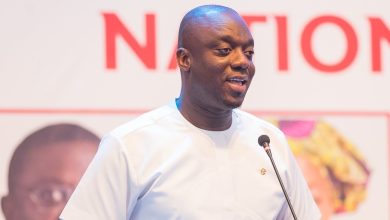
We were wlected to Serve, not perform — Oppong Nkrumah to Parliament
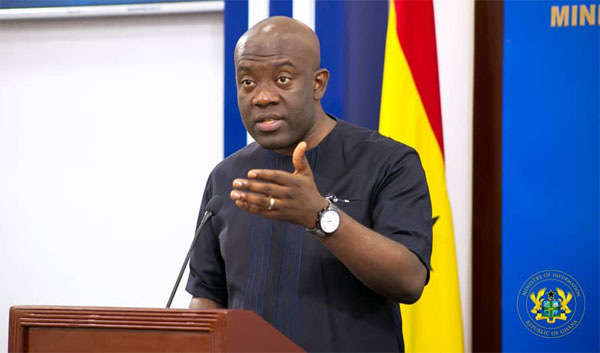
On Tuesday, February 3, 2026, Parliament resumed sitting. This is the second session of the 9th parliament. As is required the house has advertised a long list of items on its business calendar for this first meeting. Reading through the agenda got me thinking about how much impact we will be making as legislators, in the lives of citizens by the time we are done with executing the business before us.
I’ve been asking myself, how much impact will the outlined agenda of the House, make in the lives of Our People. The average Ghanaian. The unemployed, yet still-hopeful young men and women of our country. Our Traders and hustlers squashed aboard trotros and long-distance Benz 207s flying on pot-holed highways.
Our business people and entrepreneurs huddling with accountants to make the January payroll, and meet their odious tax obligations. Our cocoa farmers with their cargo of precious beans, waiting expectantly for promises made to be met.
The People’s Business is what keeps our constituents and citizens awake at night. And that ought to be our business too.
As Parliament has resumed, you can be sure there will be a lot of atmospherics. But will we do the kind of work that impacts our people’s lives?
Too often, Parliament reduces itself to a chamber of theatre. Debates are framed for clips. Interventions are judged by the loudness of the contributor’s voice than by the substance delivered. Important national questions are crowded out by partisan exchanges that may entertain, but rarely enlighten; and producing heat, but not much light.
Yet outside the chamber, young Ghanaians are dealing with realities so harsh, they have with little appetite for parliamentary drama. Jobs are scarce. Food prices are high. Manufacturing is struggling. The cedi’s prop up is benefiting some and hurting others. Cocoa farmers are waiting to be paid. Security concerns across West AFrica are a source of serious discomfort. Our regional address impacts our country’s risk profile.
Unfortunately, the nation’s deliberative chamber spends less time on these key matters and more time on performatives. We allow more time on routine ‘Government Business’ and very little time for the necessary policy and program analysis and assessments on the key things that will impact the lives of our people the most.
As we resume work in 2026, we must take ourselves – as The People’s Representatives – a lot more seriously than we have done in the past, or risk becoming irrelevant to the very people whose trust we have sworn to respect and uphold.
Out of the many items that have been listed as business for this first meeting of the second session, about five (5) issues or items are of personal interest and will engage my utmost attention. If pursued, I believe they will significantly impact the lives of my constituents and millions of other Ghanaians nationwide.
First, is the motion for an inquiry into the high levels of failures in the 2025 WASSCE which has already condemned thousands of young Ghanaians to an uncertain future, buy which has been shoved to the backburner. As will be recalled over 50% of candidates failed in core mathematics and an overall poor performance across core subjects.
The initial public stock was quickly and irresponsibly reduced to partisan ping-pong, while the executive branch announced that it will do an internal review. In December 2025, the Hon Patrick Boamah and myself filed a motion requesting the Speaker to initiate a Parliamentary Inquiry, so that this house of oversight could have a dispassionate deep dive into the causes and make recommendations to address them. The future of our unprecedented number of young ones who failed, cannot be ignored simply because it is no longer newsworthy. It is worthy pursuit because it is The People’s Business.
Second, is the inquiry into the gold trading losses recorded in 2025. Ghana cannot normalise large public financial losses without properly explaining them in order not to repeat them. It is obvious that the Government initially panicked and sought to cover up with claims that there were no losses, or that the losses should be classified as so-called “economic costs.”
No one was hoodwinked by the obfuscation. Now that the temperature has come down, we need to do the sensible thing. We must understand what caused this loss, and how to prevent it from recurring. That is what any serious democracy does. That is what our citizens reasonably expect of us. Transparency is not about looking for scapegoats. It is about restoring discipline and trust in the management of public resources. This is the People’s Business.
Third, is an inquiry into the rising cost of manufacturing in Ghana. We speak often about industrialisation, but manufacturers are battling high energy costs, logistics inefficiencies, financing constraints, and regulatory burdens. Until these are addressed candidly, manufacturing will remain a distant aspiration rather than a driver of employment.
Between January 2025 and now, electricity bills alone have gone up by 26% making nonsense of any claim that industrialisation is set to boom and create jobs. More importantly, it puts our markets at risk because we are increasingly becoming dependent on imports from countries where cost of production is better managed. Parliament ought to be interested in understanding, in a nonpartisan and dispassionate manner, why this is happening and, even more importantly, what we can agree on as solutions, not slogans.
Fourth, I am following up on my Private Member’s Amendment Bill to the Public Financial Management framework. This No Plan, No Cash Bill is aimed at making it illegal for the treasury to fund any program that is not in the National Development Plan. Simple.
If adopted, this will save some billions of public monies spent on pet projects for which we have not agreed on. Indeed, I believe if we had such a law as a guardrail for the last NPP administration, it would have been beneficial for all. Future Governments should have this benefit. Sound public finance is not an abstract ideal. It is a necessity that saves money to do the People’s Business.
Finally, we must ensure deeper scrutiny of the bills and programs of Government. It has now become the norm of the NDC government to bring all bills under a certificate of urgency. Don’t get me wrong. The rules provide for that. But they are to be used sparingly. Having become the norm now, there is little room for anyone to contribute meaningfully to legislation.
The days when Civil Society organisations, media and stakeholders could scrutinise and offer inputs into legislation have now become a thing of the past. Bills are brought by 2pm and passed by 12 midnight. We as a house need to have the opportunity to do deeper scrutiny of bills and engagement with stakeholders to ensure that their preferences are reflected in the laws passed. The recent 24-hour economy authority bill has shown that the government can easily pull wool over the people’s eyes if care is not taken.
Additionally, we must continue advocacy for Government to furnish Parliament with its program and policy documents so we can exercise better oversight. In any serious democracy, MPs are not encouraged to go fishing for government policy or program documents to effect oversight.
The executive prioritises informing the house properly, so the house does its job of oversight well. Out of the 16 program documents we have been requesting for, only one (24hour economy policy) has been laid before the house. We will need to step up our advocacy and employ other tools to compel government to make the documents available to Parliament. This is what will ensure effective oversight.
Some have tried to frame these efforts as revisiting past policy failures. That misses the point. Democracies grow stronger by learning from experience, not by burying it. Good ideas do not lose their value because they emerge from difficult chapters. In fact, the reverse is the case.
Young Ghanaians and young West Africans are watching us closely. They care about jobs, food prices, security, and opportunity in an increasingly uncertain world. The Parliament of Ghana must rise to that expectation, for I hear more jeers than cheers from our young people when we indulge in drama that’s unbefitting even of the schoolyard.
If every inquiry is dismissed because of who proposed it, accountability suffers. If every idea is judged by the party of its originators, progress slows. And if Parliament loses its place as a forum for serious national discourse and problem-solving, public trust will continue to erode. This session is an opportunity to do better.
We can disagree without being dismissive or disagreeable. We can agree on more than our personal emoluments. And we must understand that building Ghana requires a continuous stream of good ideas, not interminable arguments over who credit is owed. It requires learning from previous policy failures and successes alike, making them stronger rungs on the ladder to climb higher and do better.
Inquiries into education outcomes, public financial discipline, food sovereignty, industrial competitiveness, and economic transparency are critical. We must mainstream them for serious attention. Our constituents deserve it. These are among the key reasons they chose us. Let us focus. The People’s Business is serious business.
We were not elected to act in a series for Netflix!
We were elected to do The People’s Business!
Let’s do more of that.
Kojo Oppong Nkrumah,
MP; Ofoase / Ayirebi