Minority Cautions Against “Artificial” Economic Stability
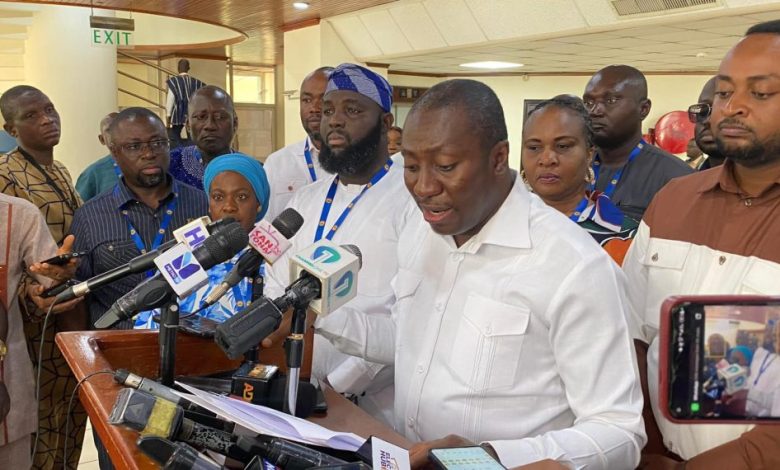
The Minority Caucus in Parliament has welcomed the recent performance reviews of the Mahama administration conducted by civil society organisations, including the Centre for Democratic Development (CDD Ghana).
However, the caucus cautions that such reviews must go beyond ceremonial exercises and establish permanent frameworks for regular, structured, and continuous assessment of government performance.
“Democracy cannot survive on propaganda, symbolism, and headline management; it survives on accountability, evidence, and truth,” the caucus said in a statement signed and issued by Frank Annoh-Dompreh, Minority Chief Whip on Friday February 20.
The Minority urged civil society groups to critically evaluate the President’s Reset agenda, focusing not just on headline achievements, but also on the methods, costs, and sustainability of policies. They warned that failing to apply these measures reduces national discourse to slogans rather than effective governance.
Economic Concerns
On economic management, the Minority reiterated that the apparent currency stability is artificial, achieved through aggressive foreign exchange interventions and depletion of Ghana’s gold reserves rather than structural economic growth. The caucus raised alarm over the high cost of these interventions—over 10 billion USD in 2025—and highlighted environmental and health risks linked to illegal mining contributing to the reserves.
Inflation management was also criticized. The caucus argued that the government’s sterilisation of over GH¢60 billion from circulation has created “economic suffocation,” constraining liquidity, credit, and business activity while achieving inflation targets at the expense of ordinary Ghanaians.
Fiscal policy, the Minority noted, shows a decline in revenue effort from 16% to 11% of GDP, leading to expenditure constraints, salary arrears, and funding shortfalls. They warned that fiscal consolidation built on declining revenue equates to institutional contraction, not reform.
Policy and Sectoral Critiques
The caucus described the 24-hour economy promise as largely symbolic, lacking the operational design needed for functional implementation. They also criticized flagship programmes, including the National Apprenticeship and National Coding Programmes, for lacking measurable outcomes in productivity and employment.
In the cocoa sector, farmers are reportedly losing over GH¢1,000 per bag due to structural changes that transfer global price risks onto them. The Minority has called for corrective measures to protect farmers from policy-induced losses.
Employment data, they added, is contradictory, with government figures ranging from 300,000 to 1 million jobs, raising questions about credibility.
The caucus further warned against renewed dependence on commodities such as gold, cocoa, and oil for economic stability, which exposes Ghana to global market shocks.
National Security Concerns
Emerging security risks, including exposure to terrorism-prone regions and unclear restructuring of the Security and Intelligence Services, were also highlighted. The caucus emphasized that security reforms should strengthen institutional coherence rather than create confusion.
Conclusion
The Minority Caucus concluded that governance should not rely on artificial stability, policy branding, or headline management. They called for reforms that are sustainable, cost-effective, and structurally transformative. They commended CDD Ghana for the assessment and urged that it be the beginning of ongoing national accountability, not a one-off exercise.
“Ghana deserves methods that work, costs that are justified, and sustainable policies. Stability without sustainability is deception. Growth without structure is collapse in waiting. Reform without transformation is propaganda,” the statement concluded.